Efficient High-Speed Heater Cooler Mixers for PVC Industry
March 17, 2025
Hopper Loader Vacuum Conveying System for Powder Transfer
April 25, 2025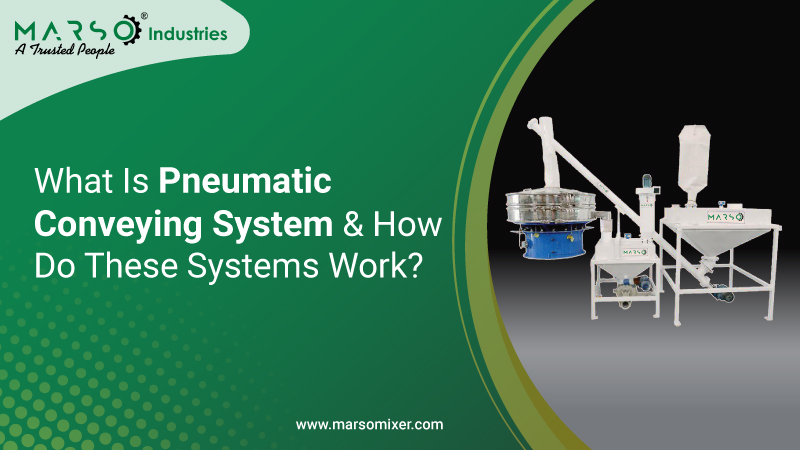
Efficient material handling is crucial in industries such as food processing, pharmaceuticals, construction, and manufacturing. One of the most effective and versatile methods for transporting bulk materials is pneumatic conveying. This system uses air pressure or vacuum to move powders, granules, and other bulk materials through a pipeline, offering a cleaner and more efficient alternative to traditional mechanical conveyors.
In this article, we will explore what a pneumatic conveying system is, its advantages, how it works, and the different types of conveyors used in industries.
What Is Pneumatic Conveying?
Definition and Overview
Pneumatic conveying is a method of transporting bulk materials using a stream of air or gas through enclosed pipelines. It is widely used for moving powders, grains, and other small particles over short or long distances. Instead of relying on belts or mechanical components, these systems utilize air pressure or vacuum to transport materials efficiently.
Key Components of a Pneumatic Conveying System
A typical pneumatic conveying system consists of the following components:
- Air Mover (Blower or Vacuum Pump): Generates the airflow necessary to transport materials.
- Feed System: Introduces materials into the conveying pipeline.
- Pipeline: A network of tubes that transport materials to the destination.
- Filter or Separator: Ensures proper separation of materials from the air before discharge.
- Control System: Monitors and regulates air pressure, flow rate, and material feed.
Where Is Pneumatic Conveying Used?
This system is widely utilized in industries such as:
- Food and Beverage: Transporting flour, sugar, cocoa, and coffee beans.
- Pharmaceuticals: Moving powdered drugs and chemicals in a sterile environment.
- Plastics and Chemicals: Conveying plastic resins, powders, and pellets.
- Cement and Construction: Transporting cement, fly ash, and sand.
What Are the Advantages of Pneumatic Conveying?
Pneumatic conveying offers several benefits compared to mechanical conveyors. Here’s why industries prefer it:
Clean and Contamination-Free Handling
Since materials are transported through enclosed pipelines, there is no risk of contamination from dust, debris, or external pollutants. This makes pneumatic conveying ideal for sensitive industries such as pharmaceuticals and food processing.
Flexible and Space-Efficient
Unlike belt or screw conveyors, pneumatic systems can be installed in various layouts, including vertical, horizontal, and curved pipelines. They require minimal floor space, making them suitable for facilities with space constraints.
Low Maintenance and Durability
With fewer moving parts, pneumatic conveying systems have lower maintenance costs compared to mechanical conveyors. The enclosed design also reduces wear and tear, extending the system’s lifespan.
High Efficiency and Automation
These systems can be fully automated, reducing the need for manual labor. Additionally, they provide consistent and efficient material transport, reducing waste and operational downtime.
Versatile Material Handling
Pneumatic conveying systems can handle a wide variety of materials, from lightweight powders to dense granules. They are particularly useful for delicate materials that need gentle handling to prevent breakage.
Safer Work Environment
By minimizing dust emissions and reducing direct material handling, pneumatic conveying systems contribute to a safer workplace by lowering the risk of respiratory hazards and material spills.
How Does a Pneumatic Conveying System Work?
Pneumatic conveying operates by using air movement to transport materials through a pipeline. There are two primary ways these systems function:
Positive Pressure System (Pressure Conveying)
- In this system, a blower pushes air through the pipeline, carrying materials to the destination.
- Commonly used for long-distance material transport.
- Suitable for bulk materials like plastic pellets, cement, and chemicals.
Negative Pressure System (Vacuum Conveying)
- A vacuum pump creates suction, pulling materials through the pipeline.
- Ideal for short distances and fragile materials like pharmaceuticals and food powders.
- Prevents contamination and leakage, making it perfect for hygienic applications.
Three Main Phases of Pneumatic Conveying
Dilute Phase Conveying
- Uses high-velocity air to keep materials suspended in the pipeline.
- Suitable for non-abrasive, lightweight materials such as flour, sugar, and plastic resins.
- Operates at low pressure with high airflow.
Dense Phase Conveying
- Uses low-velocity air with higher pressure to move materials in controlled slugs or waves.
- Ideal for fragile or abrasive materials such as cement, sand, and metal powders.
- Reduces material degradation and pipeline wear.
Semi-Dense Phase Conveying
- A balance between dilute and dense phase conveying.
- Suitable for handling a mix of fine and coarse materials with moderate air pressure.
What Are the Different Types of Conveyors?
Besides pneumatic conveying, various other conveyor systems are used for material handling. Let’s explore their types and how they compare.
Belt Conveyors
- Uses a continuous belt to transport materials.
- Suitable for large and heavy materials like coal, grain, and packaged goods.
- Requires regular maintenance due to moving parts.
Screw Conveyors
- Uses a rotating helical screw inside a tube or trough to move materials.
- Ideal for transporting powders and granular materials.
- Can be enclosed to minimize dust but requires mechanical maintenance.
Chain Conveyors
- Uses a series of chains to move materials along a track.
- Suitable for heavy loads like automotive parts and large industrial products.
- Offers durability but can be noisy and require lubrication.
Roller Conveyors
- Uses rollers to transport boxes, packages, and pallets.
- Commonly used in warehouses and distribution centers.
- Suitable for moving rigid and packaged materials.
Vibrating Conveyors
- Uses vibration to move bulk materials along a conveyor bed.
- Suitable for fragile materials like food products and minerals.
- Provides gentle handling but may have higher energy consumption.
Pneumatic Conveyors (Compared to Other Conveyors)
- Offers enclosed and contamination-free material handling.
- Requires less maintenance compared to mechanical conveyors.
- More energy-efficient and space-saving in complex industrial settings.
Conclusion
Pneumatic conveying systems have revolutionized the way bulk materials are transported across industries. By utilizing air pressure or vacuum, these systems provide a cleaner, safer, and more efficient solution compared to traditional mechanical conveyors.
With different types such as dilute phase, dense phase, and semi-dense phase conveying, industries can select the most suitable method based on their material handling needs. Compared to other conveyor types, pneumatic conveying stands out for its flexibility, automation, and contamination-free operation.
Whether in food processing, pharmaceuticals, cement manufacturing, or plastics, pneumatic conveying is a game-changer in material transport, ensuring efficiency, safety, and cost savings.